Tuesday, January 31, 2023

Biden highlights grant for Hudson tunnel, takes aim at GOP

NEW YORK (AP) — President Joe Biden on Tuesday showcased a $292 million mega grant that will be used to help build a new rail tunnel beneath the Hudson River between New York and New Jersey, part of a broader effort to draw a contrast between his economic vision and that of Republicans.

The money is part of $1.2 billion in mega grants being awarded under the 2021 infrastructure law. The Democratic president’s trip to New York City on Tuesday comes on the heels of his stop Monday in Baltimore to highlight the replacement of an aging rail tunnel there, where he pledged that government spending on infrastructure will boost economic growth and create blue-collar jobs.

The New York stop also gave Biden a chance to highlight his administration jumpstarting a project that languished during President Donald Trump’s time in office. The yearslong modernization of the Hudson project started in 2013 but stalled as Trump battled with Democratic Senate Majority Leader Chuck Schumer over funding for the project.

Courthouse News’ podcast Sidebar tackles the stories you need to know from the legal world. Join our hosts as they take you in and out of courtrooms in the U.S. and beyond.

“This is one of the biggest, the most consequential projects in the country,” Biden said. “But we finally have the money, and we’re going to get it done. I promise we’re going to get it done.”

The New York and Baltimore trips amount to a form of counterprogramming to the new House Republican majority. GOP lawmakers are seeking deep spending cuts in exchange for lifting the government’s legal borrowing limit, saying that federal expenditures are hurting growth and that the budget should be balanced.

House Speaker Kevin McCarthy, R-Calif., and Biden are scheduled to meet on Wednesday, with the Republican lawmaker intending to press his case for spending cuts even though White House officials say Biden won’t negotiate over the need to increase the federal debt limit.

“I don’t think there’s anyone in America who doesn’t agree that there’s some wasteful Washington spending that we can eliminate,” McCarthy told CBS News on Sunday.

Mitch Landrieu, the White House senior adviser responsible for coordinating implementation of the infrastructure law, told reporters on Tuesday that if Republicans are looking to “take away money from projects, they ought to, I think, identify which projects they don’t want.”

“And then you can have that discussion with the American people,” Landrieu added.

To some in the Biden administration, the Hudson Tunnel Project demonstrates what could be lost if spending cuts are put into place. In total, the construction is projected to result in 72,000 jobs, according to the White House.

The project will renovate the 1910 tunnel already carrying about 200,000 weekday passengers beneath the Hudson between New Jersey and Manhattan, a long-delayed upgrade after decades in which the government underfunded infrastructure.

“We cannot lead the world in this century if we depend on infrastructure from early in the last one,” Transportation Secretary Pete Buttigieg said.

The grant would be used to help complete the concrete casing for an additional rail tunnel beneath the river, preserving a right of way for the eventual tunnel. In total, the project is expected to cost $16 billion and help ease a bottleneck for New Jersey commuters and Amtrak passengers going through New York City.

Biden made the case the project is critical far beyond greater New York.

“If this line shuts down for just one day it would cost our economy $100 million,” Biden said. “And the current Hudson River rail tunnel can be a major chokepoint.”

Other projects to receive mega grants include the Brent Spence Bridge, which connects Kentucky and Ohio; the Calcasieu River Bridge replacement in Louisiana; a commuter rail in Illinois; the Alligator River Bridge in North Carolina; a transit and highway plan in California; and roadways in Oklahoma, Pennsylvania and Mississippi.

Not everyone has been pleased by the mega grant program. Some Republican lawmakers in Arizona say it gave preference to mass transit and repair projects over expansion and new construction.

Sen. Cory Booker, D-N.J., noted that the northeast corridor produces roughly 20% of the U.S. GDP and that Biden was finally ushering in long-awaited modernization to an essential artery that moves countless people and goods through the heart of the U.S. economy. Booker called it poetic that Biden — who regularly commuted from his home in Delaware and Washington during his years in the Senate — was the one getting the project back on track.

“This is a hallelujah moment,” Booker said.

Schumer criticized Trump for slowing the project during his term as he feuded with the Democrats.

“Get on the Joe Biden Express now because we are not stopping,” Schumer said. “For four years, the former president was shoveling you know what and now we’re going to put real shovels in the ground, wielded by real American workers.”


from Courthouse News

Monday, January 30, 2023

Top 8 today

National

For 10 tons of cocaine, witness says, Mexico’s top cop was paid $10M

A former member of a Mexican drug cartel testified in U.S. federal court Monday that he paid his country’s top security official millions of dollars to secure the transport of massive cocaine shipments and to protect traffickers from raids and arrests. 

a photo shows a car wash located in Guadalajara, Mexico
(U.S. Department of Justice via Courthouse News)

‘Don’t leave’: Tarrio’s orders for Jan. 6 riot on display

Putting the social media of five Proud Boys front and center in their seditious conspiracy trial, prosecutors called an FBI agent to testify Monday in front of a series of poster boards with their activity on Parler.

Proud Boys in orange hats rioting outside U.S. Capitol
(Justice Department via Courthouse News)

Regional

Winter storm brings icy conditions to south-central US

Winter weather has begun to settle in on large parts of Texas, Oklahoma, Arkansas and Kentucky as southerners prepare for days of potentially icy conditions.

Map showing winter weather warnings across the United States.
(National Weather Service via Courthouse News)

Chicago jury hears opening arguments in billion-dollar fraud trial

The three heads of pharmaceutical advertising company Outcome Health were in Chicago’s Dirksen Federal Courthouse on Monday to face trial on a collective 26 counts of wire, mail and bank fraud.

A black and white photo of the Dirksen Federal Building in Chicago.
(U.S. General Services Administration via Courthouse News)

Minnesota appeals court upholds stricter emissions standards

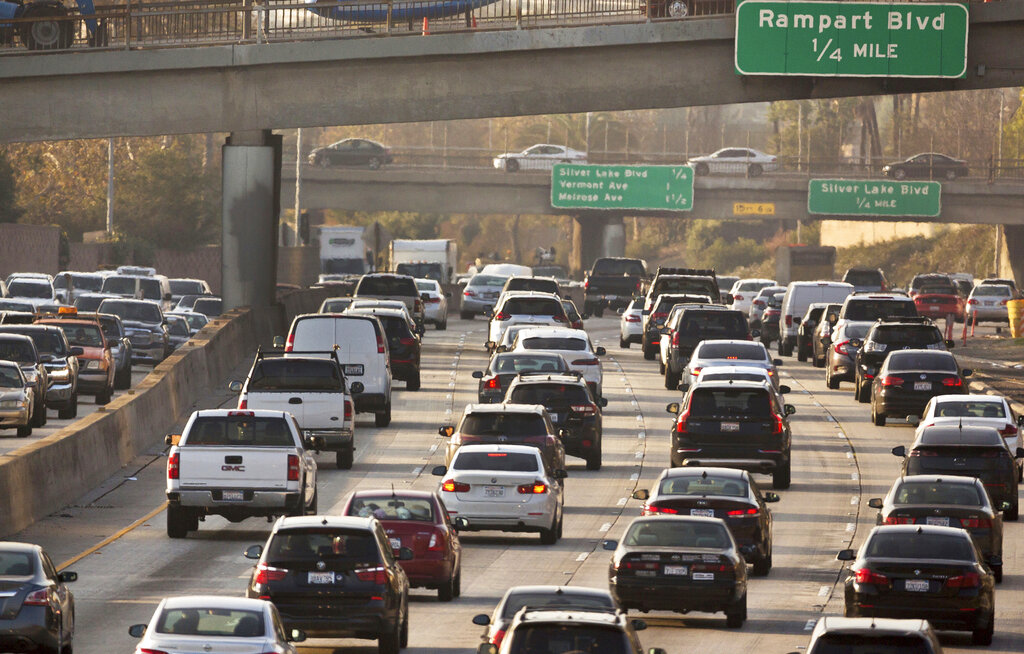
The Minnesota Court of Appeals upheld the state’s adoption of California car emissions standards Monday, finding that state pollution regulators had the authority to do so despite the objections of car dealers. 

Traffic on the Hollywood Freeway in Los Angeles.
(AP Photo/Damian Dovarganes)

International

Czechs vote for pro-EU retired NATO general for president

The Czech Republic’s turn toward a pro-NATO and pro-Western stance was consolidated over the weekend with the election of a retired NATO general as the next president.

The Czech Republic's President-elect Petr Pavel and his wife Eva.
(AP Photo/Petr David Josek)

Lawyer admits to plagiarism of Mexico Supreme Court justice’s undergrad thesis

A plagiarism scandal involving the undergraduate thesis of a justice on Mexico’s Supreme Court has taken a surprising turn

A middle-aged woman with brown hair smiles while looking off to her right
(Twitter via Courthouse News)

Armenia calls Azerbaijan blockade an act of ‘ethnic cleansing’

Amidst rising tensions between Azerbaijan and Armenia, the United Nations’ highest court opened two days of hearings Monday for the Caucasus neighbors. 

World Court at The Hague
(AP Photo/Peter Dejong)


from Courthouse News

Tuesday, January 24, 2023

UW System bans TikTok use on system devices

MADISON, Wis. (AP) — University of Wisconsin System officials said Tuesday that they will ban the use of TikTok on system devices.

System spokesman Mark Pitsch told The Associated Press about the move in email statements.

Nearly half of the states nationwide have blocked the popular social media app owned by a Chinese company. Earlier this month, Democratic Gov. Tony Evers banned the use of TikTok on Wisconsin state phones and other devices, citing potential risks to privacy, safety and security.

Courthouse News’ podcast Sidebar tackles the stories you need to know from the legal world. Join our hosts as they take you in and out of courtrooms in the U.S. and beyond.

The order didn’t apply to the UW System, which employs 40,000 faculty and staff, because it isn’t an executive branch agency. UW-Madison, the system’s flagship school, has multiple TikTok accounts, including one for the women’s volleyball team. Universities often use TikTok accounts as a recruiting tool to connect with high school students.

A number of other universities across the country have banned TikTok in recent weeks, including Auburn, Oklahoma, Arkansas, Georgia, Iowa and Texas.

TikTok is owned by ByteDance, a Chinese company that moved its headquarters to Singapore in 2020. It has been targeted by critics who say the Chinese government could access user data, such as browsing history and location. U.S. armed forces also have prohibited the app on military devices.

TikTok is consumed by two-thirds of American teens and has become the second-most popular domain in the world. But there has long been bipartisan concern in Washington that Beijing would use legal and regulatory power to seize American user data or try to push pro-China narratives or misinformation.


from Courthouse News

Storm-weary South targeted by more severe weather

(CN) — The upper Gulf Coast is not unfamiliar with hurricane-force winds, but they are typically associated with summer months, when warm, moist air fuels tropical weather systems from the Atlantic or Caribbean. So it was unusual when the first offshore storm warning since 1994 was issued Tuesday, with the coastal forecast calling for “extremely dangerous conditions,” including wind gusts reaching 70 mph and seas as high as 11 feet.

The warning from the the National Weather Service in Mobile, Alabama, comes as the storm-battered South is facing its latest round of severe weather Tuesday night into Wednesday morning. About 150 miles inland, communities including Selma and Marbury are still picking up debris from destructive tornadoes that killed nine people in Alabama and Georgia on Jan. 12.

Tornadoes are also a threat with this system, according to NWS meteorologist Don Shepherd, with areas of enhanced risk encompassing much of southeast Mississippi, southwest Alabama and the western Florida panhandle. Particularly concerning is the timing of the system, which is expected to peak between 9 p.m. Tuesday and 4 a.m. Wednesday, when fewer people are awake and tuned into severe weather warnings. 

“It is one of the higher-potential systems we’ve seen this season — the instability is a little bit of a question — but if everything materializes and comes together, it could be a pretty active event,” Shepherd said by phone Tuesday morning. “So the main thing is to make sure people are aware of the potential and have multiple ways of receiving warnings and taking action, especially with it coming in the overnight hours.”

The Deep South has been wracked with several rounds of severe weather since late December’s arctic blast, which froze more than half the country. At least 11 tornadoes touched down in central Alabama Jan. 3-4, before the region came under fire again just nine days later. 

In addition to destroying parts of historic downtown Selma, the deadly Jan. 12 outbreak included a long-track tornado that traveled more than 76 miles and reached a peak intensity of 150 mph.

Shepherd said for the most part, the weather on the eastern half of the nation has been powered by the same jet stream, or “atmospheric rivers,” that have soaked the West Coast with rain over the past several weeks, while also blanketing the Mountain West with several feet of snow. 

“It is a very active season and really looks like it will remain active, so we’re probably going to be looking at more severe weather as we go through the spring,” Shepherd said. “It’s really a very typical type pattern, but there’s a lot of moisture and perhaps a little more instability than usual and the Gulf is a little warmer for this time of the year than you typically see so that’s why it’s been a little more active.” 

Alabama Governor Kay Ivey issued a state of emergency after the storms Jan. 12, allowing the Federal Emergency Management Agency to assist state and local governments with the ongoing recovery effort. Organizers in Selma have since announced the 57th annual Bridge Crossing Jubilee will resume as scheduled. 

Autauga County EMA Director Ernie Baggett, whose county recorded seven of the nine deaths Jan. 12, said the area was continuing to clean up while they were also monitoring the latest weather system, although its most intense effects are expected to be experienced southward along the Interstate 65 corridor. 

“Our bigger concern at this point is this is coming in overnight and we still have trees and tree limbs that were broken but haven’t fallen down,” Baggett said Tuesday morning. “So we’re asking people not to drive and to be real cautious around trees. There will also likely be power outages if trees come down.”

Baggett added that he has also seen an uptick in severe weather.

“It’s been a busy past few years, to be very honest with you,” he said. “I’ve been doing this on the civilian side for 12 years and we’ve had a few [tornadoes], but our neighboring Elmore County has had 12 tornadoes in the last four years.” 

According to the NWS, the same storm system has spawned high wind warnings from eastern Texas through parts of Arkansas, nearly all of Tennessee and the western half of Georgia. Behind it, winter storm warnings and advisories are in effect in parts of Texas, Oklahoma, Arkansas, Missouri, Indiana, Ohio, Michigan and Pennsylvania. The system is expected to sweep up the eastern seaboard Wednesday, producing rain and snow from Florida to New York.


from Courthouse News

Monday, January 23, 2023

30-year-old death sentence tossed over ‘delusional’ defendant’s self-representation

SAN FRANCISCO (CN) — The California Supreme Court on Monday threw out the 1992 death sentence of a man convicted of a series of murders and robberies because he was allowed to represent himself at trial even though a psychological examination had found he likely suffered from a delusional thought disorder.

The court on Monday issued a ruling that Billy Ray Waldon’s conviction and sentence had to be vacated. The trial judge who in 1989 allowed Waldon to represent himself at trial, the court said, had been wrong to reverse the decision by another judge from a year before finding Waldon didn’t rationally perceive his situation and didn’t realize the risks and consequences of not having a defense lawyer representing him.

“Judge Boyle abused his discretion by overturning Judge Zumwalt’s Faretta denial while intentionally ignoring her findings and the bases for her decision, and by ignoring relevant evidence, including testimony from three mental health experts that caused Judge Zumwalt to conclude that Waldon was not competent to validly waive counsel or represent himself,” Associate Justice Goodwin Liu wrote for the court, referring to the the two trial judges.

Representatives of the California Attorney General’s office, which fought Waldon’s appeal, didn’t immediately respond to a request for comment on the decision. California hasn’t executed an inmate since 2006, and in 2022 Governor Gavin Newsom ordered death row to be dismantled.

Waldon, who is imprisoned in San Quentin, was convicted of three counts of first degree murder, as well as attempted murder, rape, burglary, seven counts of robbery, and two counts of animal cruelty. Because he was sentenced to death, his appeal was automatic.

The Tahlequah, Oklahoma, native was accused of going on a two-week crime spree in San Diego in December 1985, including shooting a woman and killing her daughter by setting their house on fire, raping a woman in her apartment, and robbing four other women on separate occasions. When police tried to arrest him, he fled and killed a man nearby. In his car, police found belongings of his victims as well as a box of bullets consistent with the ones used in the murders.

The crime spree landed Waldon on the FBI’s most wanted list and he was arrested the following June after he again tried to flee police who had stopped him for a traffic violation.

At his trial, he argued that federal agents framed him for the crimes to thwart his efforts to promote world peace, spread new languages, and advance Cherokee autonomy. After being discharged from the Navy in 1984, Waldon had founded several organizations, including the World Humanitarian Church, the World Esperanto Organization and the World Poliespo Organization, which he claimed was a “rapid thinking” language that he invented by combining Esperanto and Cherokee.

Before trial, Waldon asked the judge to dismiss his lawyers and to represent himself. The judge assigned to his case ordered a psychiatric examination to assess whether he had the mental capacity to waive counsel, and a court-appointed psychiatrist concluded that Waldon did not appreciate the ramifications of waiving counsel and likely had a delusional thought disorder.

Although Waldon was found competent to stand trial, the same judge denied his request to represent himself, saying that while he had “the cognitive ability to understand the proceedings, he cannot formulate and present his defense with an appropriate awareness of all ramifications.”

The case was then delayed while Waldon’s lawyer tried to get excused from representing him. The next year, Waldon’s case had been assigned to Judge Boyle and he renewed his bid to represent himself. He submitted sworn declarations from people who knew from Esperanto classes and conferences, and Boyle found these a “testament” to Waldon’s intelligence and competence.

The justices didn’t see it that way.

“Here, the reasons Waldon gave for wanting to represent himself offered no indication that he ‘actually’ appreciated the ‘significance and consequences’ of that decision,” Liu wrote for the court. “He explained in a public filing that his trial strategy consisted of surprising the prosecutor by insisting on a speedy trial; he said he needed to bring criminal charges against his former trial counsel; he told others he was prepared to die for the principle of self-representation; he claimed that the assistance of counsel violated his religion.”

Further, Liu said Waldon’s behavior, including his preoccupation with alleged conspiracies and wrongdoing unrelated to the criminal trial, and his inability or unwillingness to focus on potential defenses, did not signal an appreciation of the dangers and disadvantages he faced.


from Courthouse News

Sunday, January 22, 2023

Arizona poised to drop legislator age requirement from 25 to 18

PHOENIX — The Arizona House government committee will hear a bill this week that supporters say will increase civic engagement and voter turnout in young Arizonans. 

The Civic Participation Act, a constitutional amendment proposed by Representative Matt Gress, a Republican from Phoenix, would lower the minimum age to run for both chambers of the Arizona Legislature from 25 to 18. Arizona, currently tied for the highest age requirement, would become the 13th state with a minimum age of 18. 

Supporters say the change will encourage young voters to take a more active role in politics, engaging more with representatives that look like them and can speak to their needs. 

But one expert says those results are far from guaranteed.

What would the Civic Participation Act do?

The idea came from a 15-year-old Young Republican named Nick Delgado, who pitched it to Gress.

Gress ran for a township trustee position in his hometown of Cyril, Oklahoma, when he was 18. Now 37, he said he empathizes with those who want to make a difference but are deemed too young to do so.

“One of the common threads in my career in public service has been care for community,” Gress said. “With age comes wisdom, but care for community is a quality that’s timeless.”

The proposal comes on the heels of the second-highest young voter turnout for a midterm election in 30 years. About 27% of people 18 to 29 voted in the 2022 midterm. About 50% voted in the 2020 presidential election, an 11-point increase from 2016.

Gress said those people, especially those younger than 25, can bring a “unique perspective” to politics.

“There are a lot of young Americans who care about their community,” he said. “They bring a really good fresh perspective to some of the long-standing problems we’re facing. Problems created by older people — people who came before them.”

Gress sponsored the bill alongside the youngest state representatives from each side of the political aisle: Austin Smith, a Republican from Whittmann, and Cesar Aguilar, a Democrat from Phoenix, both of whom are 27.

Aguilar said young people may be better fit to solve some of the challenges facing the nation.

“It definitely is a generational thing,” he said. “Young people are more tech savvy (and) they have more knowledge about how the world operates.

“A lot of things you think are nonpolitical become political. Older people make (issues) political, but young people just look at trying to solve the problem.”

Will it fire up young people?

Sponsors hope the constitutional amendment will encourage young people to engage in politics through what Gress called “descriptive representation.” 

But Tom Volgy, a political science professor at the University of Arizona, said descriptive representation alone isn’t enough to make a change. 

“Reducing the age is not very important unless what that means is that those people 18 to 25 would speak to issues that people 18 to 25 would care about.”

He said being young and advocating for young people’s issues aren’t one in the same. One can be young and advocate for older people, or be old and advocate for younger people. Volgy pointed to U.S. Senator Bernie Sanders, an independent and past presidential nominee, as an example of the latter.

“Some people in their 20’s can’t address those issues,” he said. “Given the divisions in our society right now, my guess is people 18 to 25 are likely to reflect these divisions the same as (older representatives do).

Francisco Pedraza, a political science professor from Arizona State University, agreed that young legislators would have to speak to their peers’ issues to increase their civic engagement, but he said that’s a lot more likely that Volgy makes it seem.

A politician like Sanders is rare, he said, and in most cases, youth are far more likely than older people to care about youth issues.

But allowing young people to run for office doesn’t mean they’re likely to win, Volgy said. 

“There’s a reason why elected officials are typically older,” he said. “You need experience to know how to run and how to run successfully.”

Rather than gaining political experience at such a young age, Volpy said he’d rather see Arizonans pursuing education.

“The age between 18 and 22 is very critical for people getting a higher education,” he said. “People who have the chance to get a bachelor’s degree and don’t never catch up in terms of economic well being.”

But people like Aguilar can do both. 

Aguilar served as a student body senator at Northern Arizona University when he was 18, managing a budget of $1 million dollars. 

“A lot of people get involved in government at an early age,” he said. “They’re already getting experience.”

‘A youth movement’

In 2022, 10 people younger than 25 were elected to state legislative positions across the U.S. Four of them were younger than 20. 

While a small percentage of all legislators, it represents a stark contrast from the average. At the start of the 117th Congress, the average age of members of the House was 58, and average for senators was 64. In Arizona, the average state representative’s age is 53 while the average state senator’s age is 56.

“I think you’re just seeing a youth movement,” Aguilar said.

Young politicians are particularly successful in New Hampshire. Of the 25 youngest state legislators in American history, 14 of them hail from New Hampshire.

“The proof is in the pudding,” said state Representative Jonah Wheeler, a Democrat from Peterborough, New Hampshire. “New Hampshire is a civically engaged state. They are vocal and passionate about what happens in their community.”

Wheeler took office in December at age 19. 

“Everyone should feel there’s a place for them in the halls of Congress,” he said. “That includes young people, who have just as much a voice as older people.”

Wheeler was elected alongside Valerie McDonnell, who was 18 years and 196 days old when she took office on Dec. 7, making her the youngest current state legislator in the country and the third youngest of all time. 

“I think I surprised many people,” she said. “I didn’t realize I was the youngest person until after I won.”

She joked that people thought she was selling Girl Scout cookies when she went knocking on doors. 

Both McDonnell and Wheeler say their perspectives as young people help them to look at old problems in new ways, and both said their candidacy and subsequent wins inspired more political interest and involvement from their peers. 

“(Winning the election) inspired some of my classmates (and) people I knew to text me and say ‘oh, that’s cool. Maybe I can do that,’” McDonnell said. 

She said there’s no reason why people of voting age shouldn’t run for office.

“The voting age of the population is 18 years old,” she said. “These people are deemed qualified to make these decisions, so they, as society has decided, are qualified to have a larger say.” 

Pedraza believes people like McDonnell and Wheeler will soon populate the halls of the Arizona Legislature if the Civic Participation Act is passed. 

“A lot of folks younger than 25 feel really strongly about important issues, he said. “They’ll think to themselves, ‘why wait?’”

Being an amendment to the state constitution, the decision would be left in the hands of the voters if the bill is first approved by the House and Senate. 

The House government committee will hear the bill on Jan. 25 at 9 a.m. to decide whether it goes to the House floor. 


from Courthouse News

Friday, January 20, 2023

Treasury Department can’t enforce American Rescue Plan tax cut rule, 11th Circuit says

ATLANTA (CN) — A provision of the American Rescue Plan Act which would have prevented states from using pandemic relief funds to offset new tax cuts cannot be enforced, a unanimous panel of the 11th Circuit ruled on Friday.

The Atlanta-based appeals court found that the rule barring states from using relief funds to offset a decease in their net tax revenue through the end of 2024 violates the spending clause of the U.S. Constitution. The language of the provision is too ambiguous and leaves state governments unable to ascertain the conditions imposed on their acceptance of the money, the 42-page ruling explains.

“The Rescue Plan’s offset provision has affected the states’ sovereign authority to tax by binding them to a deal with ambiguous terms and placing them on the hook for billions of dollars in potential recoupment actions,” U.S. Circuit Judge Andrew Brasher wrote on behalf of the panel.

The decision applies only to the tax offset provision and does not apply to other portions of the plan.

Passed by Congress in 2021 to help hasten the nation’s recovery from the economic impact of the Covid-19 pandemic, the American Rescue Plan distributed $195.3 billion in flexible relief funds to the states. The money was earmarked to support essential workers, invest in infrastructure and respond to the public health emergency caused by the pandemic.

Accepting a cut of the stimulus package required states to comply with certain conditions. One of those conditions is a rule asking states to agree that they will not use relief funds to directly or indirectly offset a reduction in net tax revenue resulting from state laws that reduce tax burdens.

But state officials have argued that the law is unclear on what it means to “directly or indirectly” offset tax cuts with relief funds.

The mandate prompted six federal lawsuits, including one filed in federal court by Alabama, Arkansas, Alaska, Florida, Iowa, Kansas, Montana, New Hampshire, Oklahoma, South Carolina, South Dakota, Utah and West Virginia. The states alleged that the tax cut rule could be read to prohibit states from passing tax relief of any kind because it did not make clear how reductions in net tax revenue would be measured to determine compliance.

An Alabama federal judge sided with the states in 2021, finding that the provision is “a federal invasion of state sovereignty.” The federal government appealed, landing the case before the 11th Circuit in September.

The appeals court upheld the Alabama judge’s decision on Friday, ruling that it is not enough for states to know that there are strings attached to federal funds — they must also fully understand the obligations of the deal.

“We remain unable to surmount the linguistic hurdle before us––because of the fungibility of money, Rescue Plan funds could conceivably ‘indirectly offset’ any reduction in net tax revenue caused by a change in law,” Brasher, a Trump appointee, wrote, adding that the provision “alters the traditional balance of federalism by imposing a condition on a state’s entire budget process.”

What does the phrase “directly or indirectly offset” mean? Brasher wrote that the panel agrees with the states that the phrase “seems ‘extraordinarily expansive,’” noting that “an indirect offset could be boundless.”

“We simply cannot pin down when an offset becomes attenuated enough to no longer be ‘indirect,’” the ruling states.

The panel also rejected arguments proffered by a Justice Department attorney that any confusion about the provision was cleared up by a regulation issued by the Treasury Department last year. The regulation assured states that Treasury Secretary Janet Yellen does not intend to enforce the provision to recoup money based on tax cuts so long as states can pay for the tax cuts using their own funds.

But the appeals court ruled that even a narrow reading of the provision represents an “unconstitutional condition” on federal funds.

In any case, the plan fails to provide a baseline or other way to determine whether net tax revenue have been reduced, the decision says.

Brasher was joined on the panel by fellow Trump appointee U.S. Circuit Judge Robert Luck and Senior U.S. Circuit Judge Ed Carnes, a George H.W. Bush appointee.


from Courthouse News